
How many bones are in the human body? 206 for an adult, and why babies have more
An adult human body has 206 bones. Anatomists sort them into the axial skeleton of 80 bones (skull, ear bones, hyoid, spine, ribs and breastbone) and the appendicular skeleton of 126 bones (shoulders, arms, hips and legs). A baby is born with more, somewhere between about 270 and 300 depending on the source, because many small bones are still separate and fuse as the child grows.
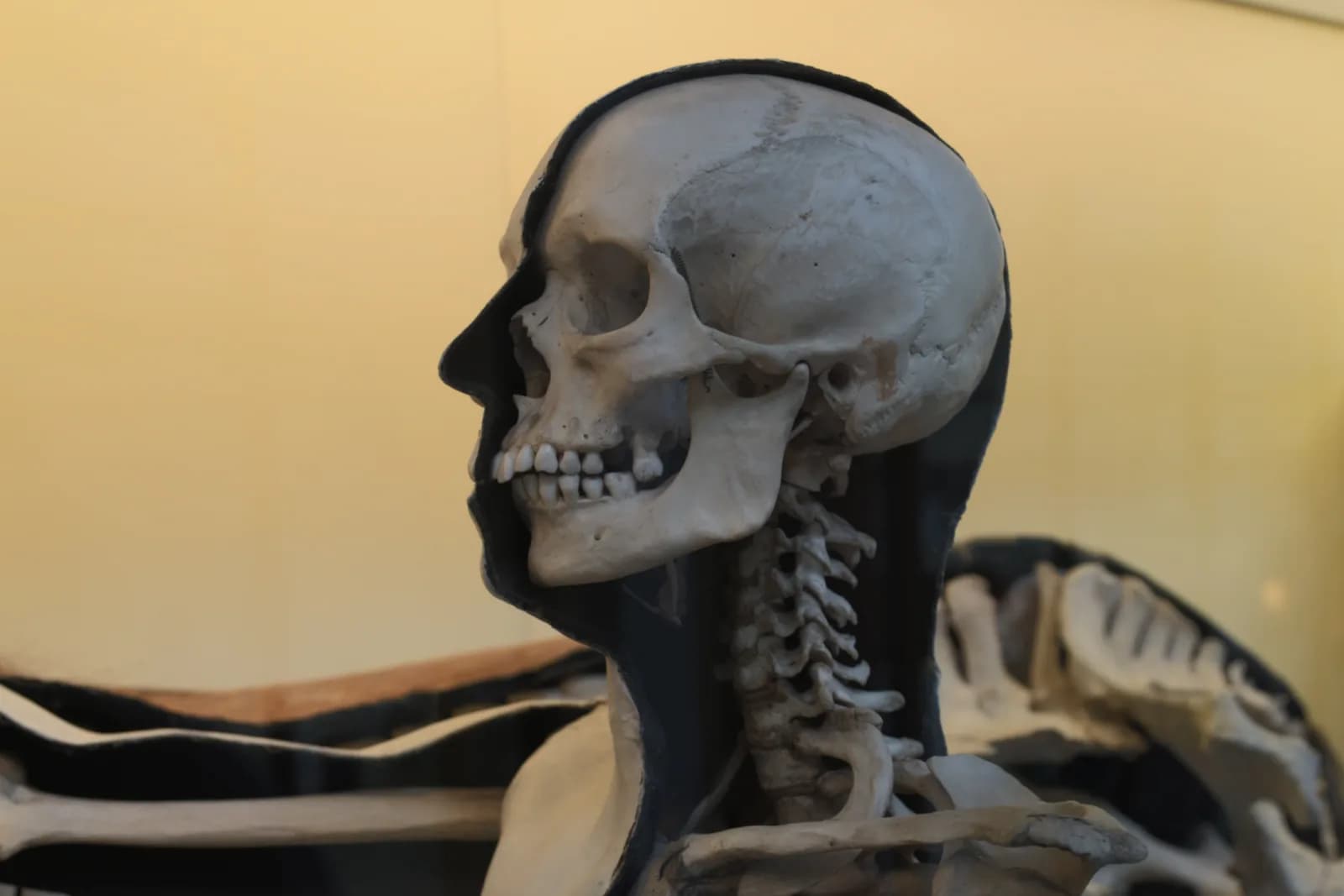
The number 206 comes from anatomy textbooks, and it raises three follow-up questions: which bones make it up, why a child has more, and why some websites give a different figure. This guide answers all three in plain words.
Key ideas
- An adult skeleton usually has 206 named bones, according to the SEER training modules of the US National Cancer Institute.
- The 206 split into 80 axial bones (skull, ear bones, hyoid, spine, ribs, breastbone) and 126 appendicular bones (limbs and the girdles that attach them).
- The hands and feet hold 106 bones, 27 in each hand and 26 in each foot, which is just over half of the skeleton.
- A newborn has roughly 270 to 300 bones because many are still separate; the sacrum, tailbone and skull plates join as the child grows.
- Counts can differ slightly between people and between sources, for example when an extra rib or small sesamoid bones are included.
The short answer: 206 bones in two groups
The adult human skeleton usually consists of 206 named bones. Anatomists split them into two divisions: the axial skeleton, which forms the vertical axis of the body, and the appendicular skeleton, which holds the limbs and the girdles that attach them to that axis.
The axial skeleton has 80 bones: 22 in the skull (8 cranial and 14 facial), 6 tiny ear bones, the hyoid bone in the neck, 26 in the vertebral column, the breastbone and 24 ribs. The appendicular skeleton has 126: 4 in the shoulder girdles (two collarbones and two shoulder blades), 60 in the arms and hands, 2 hip bones and 60 in the legs and feet. Together, 80 plus 126 gives 206.
Lists differ in how they group the ear bones. The SEER modules put them inside a skull total of 28; this guide keeps them apart so that the skull stays at 22 bones. The grand total does not change.
Where the bones are: more than half sit in the hands and feet
Each hand has 27 bones: 8 in the wrist, 5 in the palm and 14 in the fingers. Each foot has 26: 7 in the ankle and heel region, 5 long bones in the middle of the foot and 14 in the toes. Two hands and two feet add up to 106 bones, just over half of 206.
The spine holds another surprise. In early life it has 33 vertebrae: 7 in the neck, 12 in the chest, 5 in the lower back, 5 sacral and 4 coccygeal. The five sacral vertebrae fuse into one bone, the sacrum, and the four coccygeal ones into the tailbone, so an adult counts 26 separate bones in the column.
The longest and strongest bone is the thigh bone, the femur. The smallest is the stapes in the middle ear, only a few millimetres long. Teeth are not counted: they are hard structures, but they are not bones.
Why babies have more bones, and what changes with age
A newborn's skeleton is not just a smaller copy of an adult one. The skeletal pattern is laid down in cartilage and connective tissue before birth, and many bones turn into true bone through a process called ossification that continues through childhood. Estimates of the number of bones at birth run from about 270 to about 300, depending on how the still-separate parts are counted.
As a child grows, separate pieces join. The five sacral vertebrae merge into one bone and the four tailbone vertebrae into another. The skull plates, flexible at birth, become locked together by seams called sutures. The growing ends of long bones fuse to their shafts when growth stops. Most of this is finished by the end of adolescence, and a little joining, such as at the inner end of the collarbone, continues into the early twenties.
Bone stays alive after that. Living bone uses oxygen, has a blood supply and rebuilds itself in response to mechanical stress. So the number of bones stays at 206 in adulthood, while the tissue itself keeps being renewed.
Why you may see a different number
206 is a standard teaching figure for the named bones of a typical adult, not a law of nature. Some people have an extra rib, an extra vertebra or additional sesamoid bones, which are small bones that form inside tendons. The kneecap, the largest sesamoid, is always counted; the other sesamoid bones are usually left out of the 206.
Sources also disagree because they count different things. Some give 33 for the spine, which is the number of vertebrae before the sacral and tailbone ones fuse, instead of the 26 separate bones of an adult. A page that says 33 for the spine or 28 for the skull is not necessarily wrong: it is counting something else. Check what each page includes before deciding that one of them is mistaken.
This guide gives general anatomy facts, not medical advice. For questions about one person's skeleton, ask a doctor.
See the skeleton move: the VJOURNAL SMART BOOK chapter
The Biology book of the VJOURNAL SMART BOOK series in VITON13 SCHOOL has a chapter called The skeleton: 206 bones. A living 3D model of the skeleton stands beside the text and changes as you read: first the whole skeleton, then the skull, the spine, the ribs and joints, and finally a bone cut open to show the marrow.
Under the picture there is a sandbox. Choose a region such as the skull, the spine, the ribs, a hand or a foot, and it lifts out of the skeleton with its name and its bone count, so you can check the numbers in this guide yourself. The chapter ends with a short quiz and the list of sources behind its facts.
In everyday language
Think of the skeleton as a model kit. A baby's kit comes with extra loose pieces; as the child grows, some pieces are glued together, and the finished adult model has 206.
Try it yourself
Open the skeleton chapter, pick the hand in the sandbox and note how many bones it shows, then do the same for the foot.
Expected result
The hand lifts out with 27 bones and the foot with 26.
Check your answer: Two hands and two feet together: how many bones is that, and is it more or less than half of 206?
2 × 27 + 2 × 26 = 106 bones. Half of 206 is 103, so the hands and feet hold slightly more than half of the skeleton.
Questions
How many bones does a baby have?
A newborn has roughly 270 to 300 bones, depending on the source and on how the separate pieces are counted. Many fuse during childhood, which brings the total down to 206 in most adults.
Do men and women have the same number of bones?
A typical adult skeleton has 206 bones in both sexes. Bones differ in size and shape, for example in the pelvis, but not in the standard count.
Which is the longest bone and which is the smallest?
The femur, or thigh bone, is the longest and strongest bone in the body, about a quarter of a person's height. The smallest is the stapes, one of the three bones of the middle ear.
Are teeth bones?
No. Teeth are not counted among the 206 bones. They are hard structures built of enamel, dentine and other tissues, not of bone tissue.
Is bone a living tissue?
Yes. According to the SEER training modules, living bones use oxygen, need a blood supply and remodel in response to stress. In adults, red marrow in the spongy bone of the skull, ribs, breastbone, collarbones, vertebrae and pelvis makes blood cells.
Remember 206 = 80 + 126, then open the skeleton chapter and pick any region to watch its bone count appear on the model.
Sources and further reading
- SEER Training, US National Cancer Institute: Divisions of the Skeleton ↗Sources checked:
- SEER Training: Introduction to the Skeletal System ↗Sources checked:
- SEER Training: Bone Development and Growth ↗Sources checked:
- Wikipedia: Human skeleton ↗Sources checked: