
What is DNA? The molecule that carries your genetic instructions, explained simply
DNA, short for deoxyribonucleic acid, is the molecule that carries genetic information for the development and functioning of an organism. It is made of two strands twisted into a double helix, and each strand is a chain of four chemical bases: adenine (A), thymine (T), cytosine (C) and guanine (G). The order of these bases, about 3 billion base pairs in one human genome, spells out the instructions for making proteins and RNA.
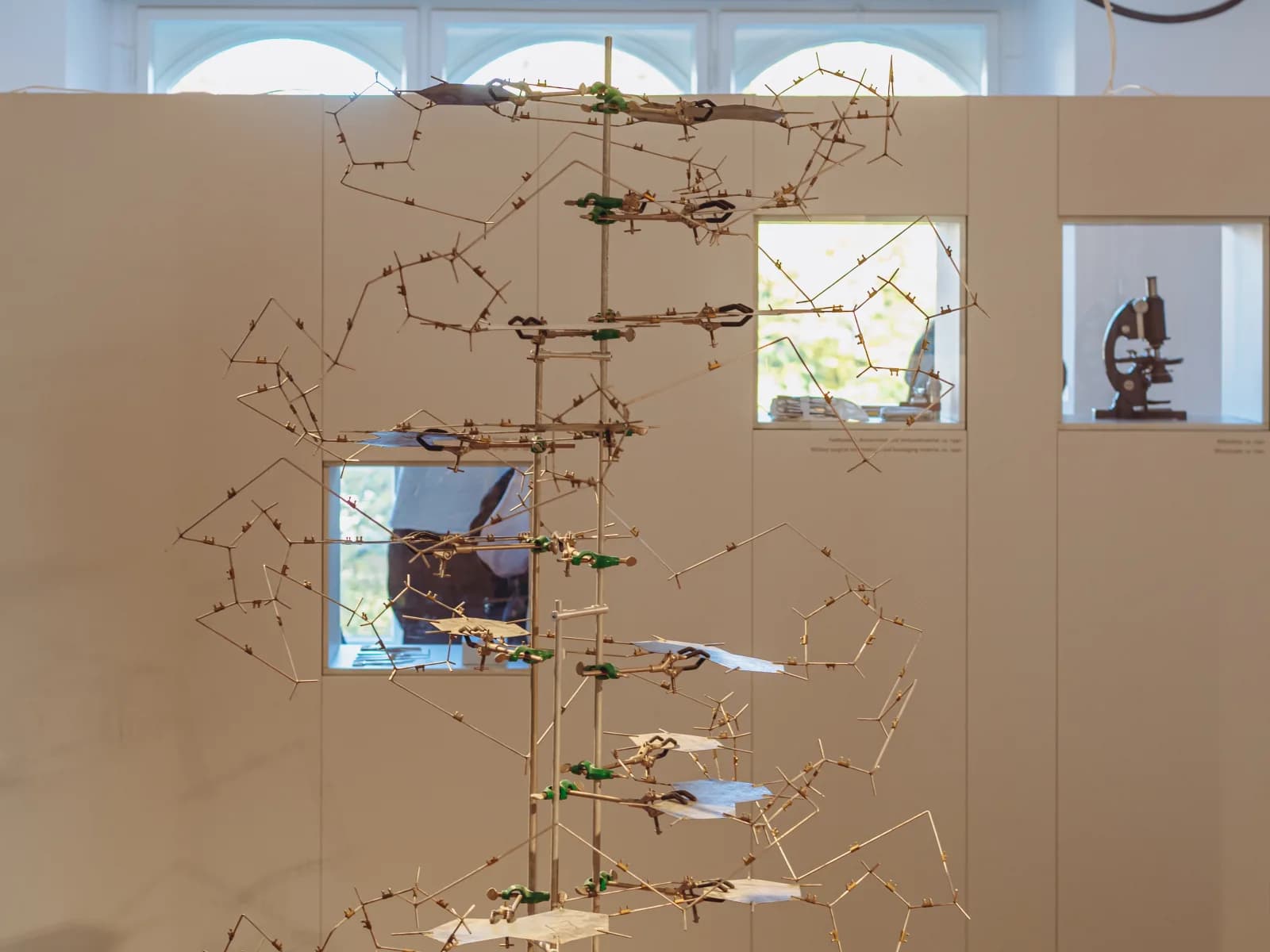
DNA is often called the blueprint of life, a handy picture but a little too tidy. This guide explains what DNA is made of, how genes and chromosomes fit in, how a cell reads the code and how alike two people really are.
Key ideas
- DNA stands for deoxyribonucleic acid, a molecule shaped like a twisted ladder, the double helix.
- It is written with four bases, A, T, C and G; A always pairs with T and C with G, and their order is the code.
- One human genome has about 3 billion base pairs, packed into 23 pairs of chromosomes (46 in total) in nearly every cell.
- A gene is a stretch of DNA with instructions, often for a protein; the current count of protein-coding genes in humans is about 19,900.
- The DNA of any two people is 99.9 percent identical, and the small remainder helps make each person unique.
What DNA is made of
DNA is built of two long strands that wind around each other like a twisted ladder, a shape called the double helix. Each strand has a backbone of alternating sugar (deoxyribose) and phosphate groups, and attached to every sugar is one of four bases.
The four bases are adenine (A), thymine (T), cytosine (C) and guanine (G). Bonds between bases hold the two strands together, and the pairing is strict: A always bonds with T, and C always bonds with G. One base with its sugar and phosphate is a nucleotide, and a pair of bases across the ladder is a base pair.
Because of the pairing rule, one strand predicts the other. That is what lets a cell copy its DNA before it divides: each strand serves as the pattern for building its partner, so each new cell receives an exact copy.
Where DNA is and how much there is
Nearly every cell in a person's body carries the same DNA. Most of it sits in the nucleus of the cell, where it is called nuclear DNA, and a small amount lies inside the mitochondria, the structures that turn food into usable energy, where it is called mitochondrial DNA.
One human genome, a complete set of instructions, has about 3 billion base pairs. The molecule is packaged: DNA is coiled tightly around proteins called histones to form chromosomes. Each cell normally has 23 pairs of chromosomes, 46 in total, made of 22 pairs of autosomes and one pair of sex chromosomes. Chromosomes become visible under a microscope only while a cell is dividing and its DNA is packed more tightly.
Stretched out straight, the DNA in a single human cell would be roughly two metres long, a commonly quoted estimate, which is why such tight packing is needed.
Genes, and how a cell reads them
A gene is the basic physical and functional unit of heredity: a stretch of DNA that carries instructions. Some genes are instructions for making proteins, which the body needs in order to work. Many genes do not code for proteins and instead help control other genes. Genes range in size from a few hundred base pairs to more than 2 million.
The Human Genome Project, carried out from 1990 to 2003, first estimated between 20,000 and 25,000 protein-coding genes. Later work puts the figure at about 19,900. Protein-coding genes are only a part of the genome, and the rest of the 3 billion base pairs is still being studied.
To use a gene, the cell first copies it into a working strand of messenger RNA, a step called transcription; RNA uses the letter U in place of T. A ribosome then reads the messenger RNA three letters at a time. Each triplet, or codon, selects one amino acid, and the chain of amino acids folds into a protein with a particular shape.
How alike we are, and how the double helix was found
According to the US National Human Genome Research Institute, the DNA of any two people is 99.9 percent identical. The remaining 0.1 percent holds variations that, together with environment and experience, help make each person unique. A small number of genes, less than 1 percent of the total, come in slightly different versions called alleles.
The double helix was described in 1953 by James Watson and Francis Crick in a two-page paper in the journal Nature, published on 25 April. Their model drew on X-ray images of DNA, among them the famous Photo 51 taken by Rosalind Franklin and Raymond Gosling.
Read a DNA strand yourself: the VJOURNAL SMART BOOK chapter
The Biology book of the VJOURNAL SMART BOOK series in VITON13 SCHOOL has a chapter called Cells and DNA. A living 3D model stands beside the text and moves through five moments: the crowd of about 37 trillion cells in one body (an estimate), the inside of a cell, the double helix with its A-T and C-G pairs, the path from DNA to RNA to protein, and cell division.
In the sandbox under the picture you type a strand of DNA and the matching partner strand appears, pairing each letter by the rule above, together with the RNA message built from your strand. The chapter ends with a short quiz and the sources behind its facts.
In everyday language
DNA is a very long recipe book written with only four letters. The cell keeps the book safe in its nucleus and copies out one recipe at a time for the kitchen, where proteins are cooked.
Try it yourself
Open the cells chapter, type the strand ATGCCA into the sandbox and read the partner strand that appears.
Expected result
The partner strand TACGGT, built by pairing A with T, T with A, G with C and C with G.
Check your answer: One strand of DNA reads GGATC. What does the partner strand read?
CCTAG, because G pairs with C, A with T and T with A.
Questions
What does DNA stand for?
Deoxyribonucleic acid. The name comes from the sugar in its backbone, deoxyribose, and from the fact that it is a nucleic acid.
What is the difference between DNA, a gene and a chromosome?
DNA is the molecule itself. A gene is a stretch of DNA that carries instructions, often for a protein. A chromosome is DNA coiled tightly with proteins into one package; humans normally have 46, in 23 pairs.
How much DNA do two people share?
The DNA of any two people is 99.9 percent identical, according to the US National Human Genome Research Institute. The remaining 0.1 percent contains the variations that help make each person unique.
Is all DNA found in the cell nucleus?
Most of it is, but a small amount is inside the mitochondria as mitochondrial DNA, according to MedlinePlus Genetics.
How is RNA different from DNA?
RNA is usually a single strand that serves as a working copy of a gene, and it uses the base U (uracil) in place of T. Messenger RNA carries the message from the nucleus to the ribosome, which builds the protein.
Remember the pairing rule, A with T and C with G, then open the cells chapter, type a strand and watch its partner strand and RNA message appear.
Sources and further reading
- MedlinePlus Genetics, US National Library of Medicine: What is DNA? ↗Sources checked:
- NHGRI, US National Human Genome Research Institute: Deoxyribonucleic Acid (DNA) ↗Sources checked:
- MedlinePlus Genetics: What is a gene? ↗Sources checked:
- MedlinePlus Genetics: How many chromosomes do people have? ↗Sources checked:
- Nature, 1953: Watson and Crick, Molecular Structure of Nucleic Acids ↗Sources checked: