
Largest countries in the world by area: the top 10 in km²
Russia is the largest country in the world, with 17,098,246 km² of total area, about 1.7 times the size of Canada (9,984,670 km²). Next come the United States (9,833,517 km²), China (9,600,000 km²) and Brazil (8,510,417 km²), according to the UN Statistics Division’s Demographic Yearbook 2024.
A list of the largest countries looks simple until you compare two sources and find the United States and China in a different order. This guide gives the ten largest countries in the world by total area from one consistent source, the UN Demographic Yearbook 2024, explains the difference between total area and land area, shows why the United States and China swap places and why disputed borders change some figures, and puts size next to population. Then you can find all ten on a free interactive world map.
Key ideas
- The ten largest countries by total area (UN Demographic Yearbook 2024) are Russia, Canada, the United States, China, Brazil, Australia, India, Argentina, Kazakhstan and Algeria.
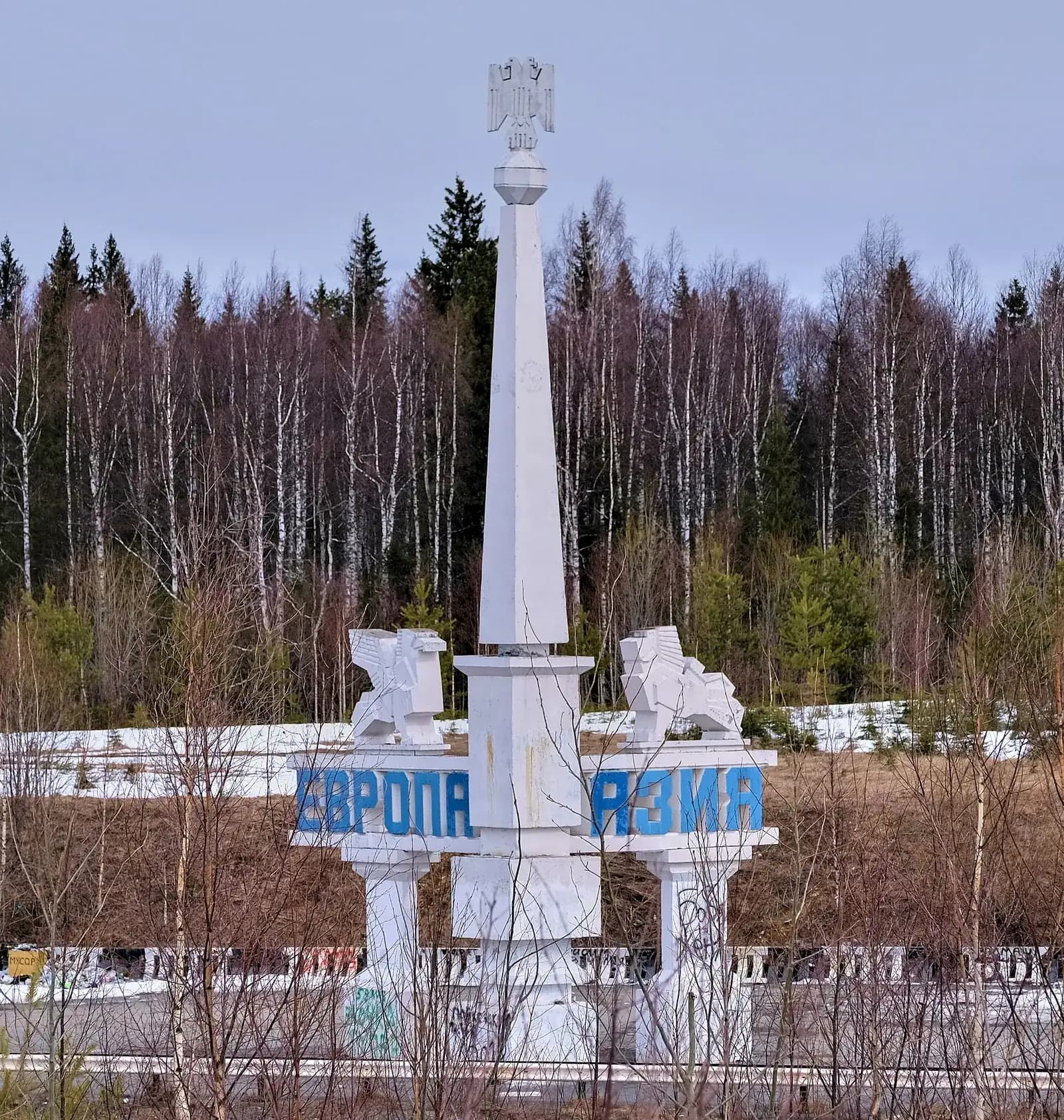
- Russia, at 17,098,246 km², covers about one-ninth of the world’s land and lies in both Europe and Asia.
- The United States and China change places depending on whether coastal and territorial waters are counted; by land area alone the order is Russia, China, the United States, Canada.
- Area is not population: India, seventh by area, overtook mainland China as the most populous country in April 2023, by the UN’s estimate.
What is the largest country in the world?
Russia is the largest country in the world, with a total area of 17,098,246 km² in the UN Statistics Division’s Demographic Yearbook 2024. That is about one-ninth of all the land on Earth and some 7.1 million km² more than Canada, the second largest. Russia spans two continents: its European part alone covers roughly 4 million km², around 40% of Europe, and the rest stretches across northern Asia to the Pacific.
Canada is second with 9,984,670 km², and it has the largest area of water of any country. Its lakes and rivers cover about 891,163 km², so by land area alone Canada drops behind China and the United States. That is why the question “what is the second largest country” has two correct answers, depending on whether water counts.
Size says little about people. In the same yearbook Russia had an estimated 146.1 million inhabitants in mid-2024, about 8.5 people per km²; Canada had 41.3 million, about 4.1 per km², and Australia 27.2 million, about 3.5 per km². Much of the territory of all three is cold, dry or remote, and most people live in a fraction of it.
The 10 largest countries in the world by area
By total area, land plus inland water, the UN Demographic Yearbook 2024 ranks them: 1. Russia, 17,098,246 km²; 2. Canada, 9,984,670 km²; 3. United States, 9,833,517 km²; 4. China, 9,600,000 km²; 5. Brazil, 8,510,417 km²; 6. Australia, 7,692,024 km²; 7. India, 3,287,263 km²; 8. Argentina, 2,796,427 km²; 9. Kazakhstan, 2,724,910 km²; 10. Algeria, 2,381,741 km². The gap after Australia is striking: India, in seventh place, is less than half its size.
Every inhabited continent has at least one country in the top ten. By the UN’s regions, Russia counts for Europe; Canada and the United States are in North America; Brazil and Argentina in South America; China, India and Kazakhstan in Asia; Australia in Oceania; and Algeria in Africa. Kazakhstan is the largest country without a coastline, and Algeria is the largest country in Africa.
Just outside the top ten come the Democratic Republic of the Congo, 2,345,410 km², and Saudi Arabia, 2,206,714 km². Greenland, at 2,166,086 km², is bigger than most countries, but it is part of the Kingdom of Denmark, so it is not ranked as a country of its own.
Why do lists of the largest countries differ?
Lists differ mainly because they measure different things: total area includes lakes, rivers and sometimes coastal waters, while land area counts only dry land. Using land area, the order at the top changes to Russia, 16,376,870 km²; China, 9,326,410 km²; the United States, 9,147,593 km²; and Canada, 9,093,507 km², because Canada has far more water than the other two.
The United States and China are the classic case. The UN Statistics Division, the CIA World Factbook and Encyclopaedia Britannica all put the United States ahead of China in total area, but their figure for the United States includes coastal and territorial waters, while China’s does not. Britannica gives the area of the United States without those waters as 9,525,067 km², which is less than China’s figure in any of the three sources. So China is larger if coastal waters are left out; with them, no one can say for sure, because China publishes no figure for its coastal and territorial waters.
Borders and methods move the numbers too. China’s figure leaves out Taiwan and the areas it disputes with India, while India’s figure includes disputed territories that it claims but does not control. Argentina’s total in the UN yearbook excludes its claim in Antarctica. Even undisputed figures vary: the UN gives Australia 7,692,024 km², the CIA World Factbook 7,741,220 km². None of these differences changes the order of the top ten except for the United States and China.
How to see the largest countries on a world map
To get a feel for these sizes, look at the countries on a map. The free world map at VITON13 SCHOOL is interactive, drawn from Natural Earth outlines, and covers the 195 countries: the 193 UN members and the 2 observer states. Tap Russia, Canada or Brazil and you see its name, its capital and its flag; use the continent filter to compare the giants of one continent with their neighbours.
Keep in mind that every flat map stretches the round Earth somewhere, so shapes far from the equator can look larger or smaller than they are; for size, trust the figures in km². Then test yourself: play the quiz “find the country on the map” for each continent and make sure you can place all ten of the largest countries at the first try.
Finally, print the blank outline map, shade the top ten from darkest to lightest and write each area beside it. To go further, learn their capitals with the world capitals list and trainer: Moscow, Ottawa, Washington, Beijing, Brasília, Canberra, New Delhi, Buenos Aires, Astana and Algiers.
In everyday language
Imagine sharing out all the land on Earth. Russia alone would take about one slice in nine, almost twice as much as Canada. But a big slice does not mean many people: much of Russia, Canada and Australia is cold, dry or far from everything, so their people live close together in a small part of it.
Try it yourself
Open the world map and find the ten largest countries in order, from Russia to Algeria. Tap each one and write down its capital next to its area in km².
Expected result
A list of ten countries with their capitals and areas: Russia, Canada, the United States, China, Brazil, Australia, India, Argentina, Kazakhstan and Algeria.
Check your answer: How many square kilometres larger is Russia than Canada, using the UN figures?
7,113,576 km²: 17,098,246 − 9,984,670 = 7,113,576, so Russia is about 1.7 times the size of Canada.
Questions
What is the largest country in Africa?
Algeria, with 2,381,741 km² in the UN yearbook. The Democratic Republic of the Congo is a close second with 2,345,410 km².
Is the largest country also the most populous?
No. Russia is the largest by area, but India is the most populous: by the UN’s estimate, India’s population reached 1,425,775,850 in April 2023, matching and then passing that of mainland China.
Russia is the largest country in the world, followed by Canada, the United States, China and Brazil; the US and China swap places depending on coastal waters. Open the free VITON13 SCHOOL world map, tap the ten giants, play the quiz and print the outline map to fix their sizes in memory.
Sources and further reading
- UN Statistics Division: Demographic Yearbook 2024, Table 3 (population, surface area and density) ↗Sources checked:
- Wikipedia: List of countries and dependencies by area (total and land area, the US and China) ↗Sources checked:
- UN DESA Policy Brief No. 153 (24 April 2023): India overtakes China as the world’s most populous country ↗Sources checked: